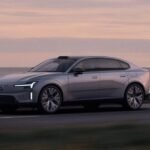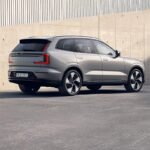

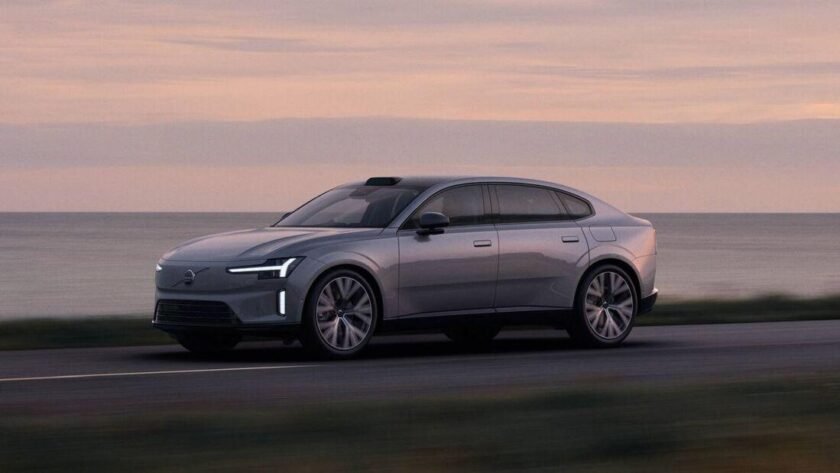
The Volvo ES90 is set to become one of the most interesting luxury electric cars to enter the Indian market. Designed as Volvo’s flagship electric sedan, the ES90 combines Scandinavian luxury, long-distance electric capability, advanced safety technology and a software-driven architecture.
For India, the ES90 is particularly important because it marks Volvo’s return to the premium luxury sedan space after the S90 was discontinued. Volvo India has already listed the ES90 on its official Indian website, where it is currently marked as “Coming soon”, and recent reports indicate an Indian launch on October 12, 2026.
Rather than following the traditional formula of a low-slung luxury sedan, the Volvo ES90 attempts something slightly different. It combines sedan proportions with a relatively practical body design, modern EV architecture and a hatchback-style rear opening, creating a luxury electric car aimed at buyers who want comfort without giving up everyday usability.
Volvo ES90 India: Highlights
| Feature | Details |
|---|---|
| Expected India Launch | October 12, 2026 |
| Expected Price | Around ₹1.1 crore to ₹1.2 crore, depending on variant and positioning |
| Body Style | Luxury electric sedan |
| Platform | Volvo SPA2 |
| Electrical Architecture | 800V |
| Battery Options Globally | 92 kWh and 106 kWh |
| Drive Options | Rear-wheel drive and all-wheel drive |
| Maximum Claimed Range | Around 700 km WLTP in selected configurations |
| Fast Charging | Up to 350 kW |
| Main Expected Rival | BMW i5 |
| Key Strengths | Safety, range, technology and premium comfort |
Note: Final Indian specifications, variants and pricing have not yet been officially announced, so some details may change at launch. Volvo’s Indian website currently lists the ES90 as an upcoming model.
Volvo ES90 India Launch Date and Expected Price
The Volvo ES90 is expected to launch in India on October 12, 2026, alongside the Volvo EX90 electric SUV. Reports suggest that both vehicles will become Volvo’s flagship EV offerings in India.
The expected price is currently uncertain. Some industry reports have estimated the ES90 at around ₹1.1 crore to ₹1.2 crore (ex-showroom), while other estimates are lower. The final price will depend heavily on the variant brought to India, equipment levels and whether the car is imported as a Completely Built Unit (CBU). Therefore, buyers should treat all pre-launch price estimates as tentative.
At around ₹1 crore or more, the ES90 will target buyers looking for an alternative to German luxury electric sedans. Its strongest competitor is expected to be the BMW i5, although higher-priced electric luxury cars such as the BMW i7 and Mercedes-Benz EQS could also attract similar customers.
Volvo ES90 Design and Exterior
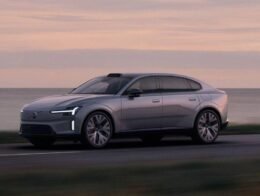
The ES90 follows Volvo’s modern electric design philosophy. The front features a closed grille, Volvo’s signature Thor’s Hammer LED lighting signature and clean, minimal body surfaces.
The overall shape is particularly interesting. It is technically positioned as a sedan, but its fastback-style roofline and raised proportions give it a more versatile appearance than a conventional three-box luxury sedan.
Key exterior highlights are expected to include:
The ES90 measures close to five metres in length, placing it firmly in the executive luxury car category. Its large footprint should also help provide substantial cabin space.
Volvo ES90 Interior and Cabin
Inside, the Volvo ES90 follows the minimalist Scandinavian approach that has become a defining characteristic of modern Volvo interiors.
The center piece is expected to be a large 14.5-inch portrait-oriented touchscreen running Volvo’s Google-based infotainment ecosystem. Google Maps, Google Assistant and supported applications are integrated into the vehicle’s digital environment.
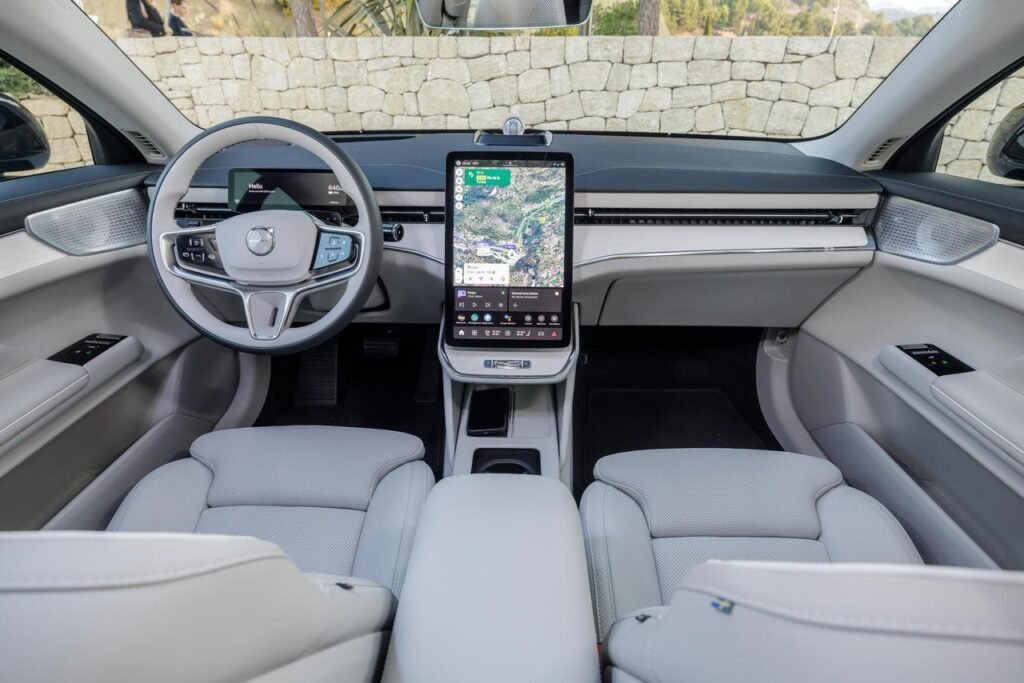
Other expected features include:
The ES90 has been developed as a software-defined vehicle, meaning Volvo can introduce improvements and features through software updates during the vehicle’s lifecycle. Volvo says the car uses next-generation core computing and its Superset technology stack to allow continuous evolution through over-the-air updates.
Volvo ES90 Battery, Range and Performance
Globally, the Volvo ES90 has been announced with different electric powertrain configurations.
Reports covering the India-bound model indicate two primary battery configurations:
Single-Motor Version
Twin-Motor Version
The larger battery configuration can deliver a WLTP range of around 700 km in selected global specifications, making the ES90 one of the longest-range Volvo electric cars. However, the exact India-spec range will depend on the version launched here.
800V Architecture and Charging
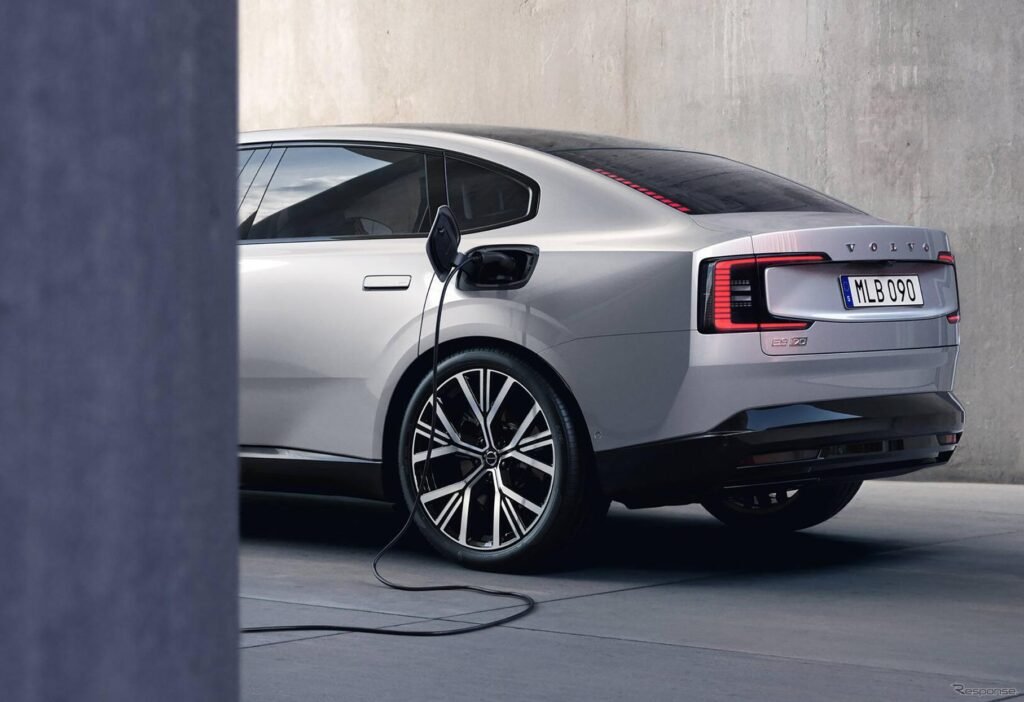
One of the Volvo ES90’s biggest technological advantages is its 800V electrical architecture.
This allows the car to support significantly faster charging than earlier Volvo EVs. The ES90 can support charging speeds of up to 350 kW under suitable conditions and with compatible high-speed chargers.
Volvo and Indian automotive reports have indicated that the car can potentially add around 300 km of range in approximately 10 minutes under ideal high-power charging conditions.
However, this figure should be viewed in the context of India’s charging infrastructure. Ultra-fast 350 kW charging stations remain relatively limited compared with slower DC charging networks. Therefore, real-world Indian charging times will depend significantly on the charger available.
Volvo ES90 Safety Features
Safety has always been central to Volvo’s brand identity, and the ES90 takes this philosophy into the software and sensor era.
The car is expected to feature an extensive sensor suite, including:
The ES90’s sensor suite is supported by advanced computing hardware and software. Volvo has positioned this technology as part of its strategy to improve vehicle safety through data, artificial intelligence and continuous software development.
For Indian buyers, this safety-first positioning could become one of the ES90’s strongest differentiators.
Volvo ES90 Practicality and Boot Space
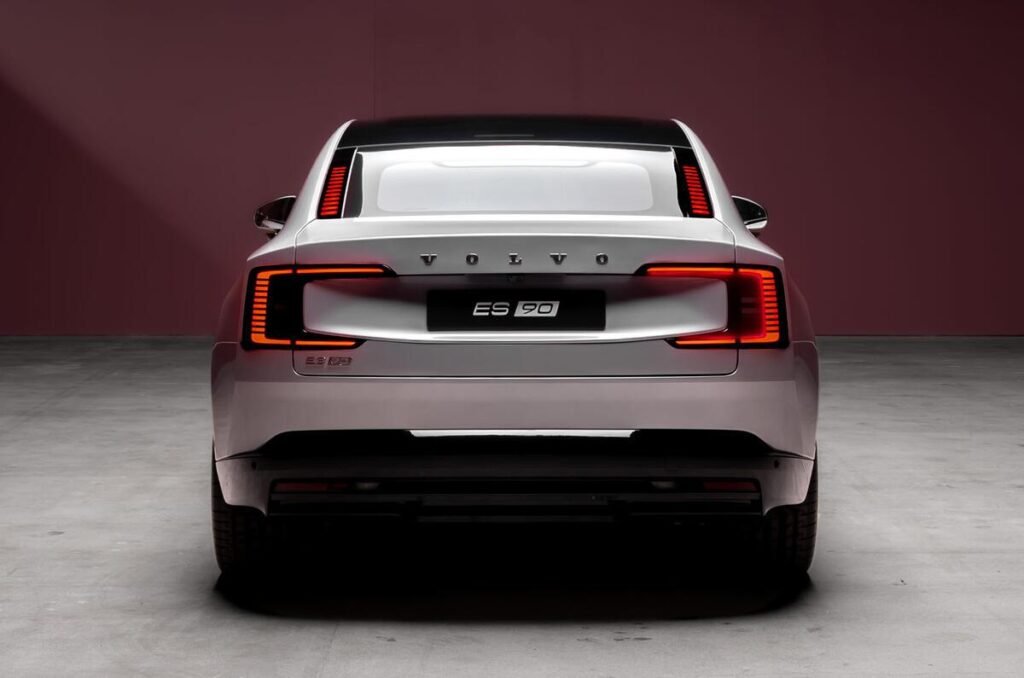
Despite its premium sedan positioning, the ES90 has been designed with practicality in mind.
The car offers approximately:
This gives the ES90 an advantage over many traditional luxury sedans, particularly for buyers who want to use the car for airport transfers, business travel and long-distance family journeys.
Volvo ES90 vs Main Competitors in India
1. Volvo ES90 vs BMW i5
The BMW i5 is likely to be the Volvo ES90’s most direct competitor in India.
| Feature | Volvo ES90 | BMW i5 |
|---|---|---|
| Positioning | Luxury electric sedan | Luxury electric executive sedan |
| Platform | SPA2 | BMW CLAR-based architecture |
| Electrical Architecture | 800V | 400V architecture in current i5 generation |
| Maximum Global Range | Up to around 700 km WLTP | Lower claimed range depending on variant |
| Fast Charging | Up to 350 kW | Lower peak DC charging capability |
| Design | Minimalist Scandinavian | Sporty and traditional BMW |
| Driving Character | Comfort and refinement focused | More driver-focused |
| Safety Focus | Extremely strong | Strong |
Which one should you choose?
Choose the Volvo ES90 if you want:
Choose the BMW i5 if you want:
The ES90 appears particularly strong on paper in charging technology and potential range, while the i5 remains attractive for drivers who prioritize handling and driving engagement.
2. Volvo ES90 vs BMW i7
The BMW i7 belongs to a higher and more expensive luxury category, but some buyers considering a flagship electric sedan may compare the two.
| Feature | Volvo ES90 | BMW i7 |
|---|---|---|
| Positioning | Premium flagship EV | Ultra-luxury flagship EV |
| Focus | Technology, safety and efficiency | Luxury and rear-seat comfort |
| Cabin Style | Minimalist | Highly extravagant |
| Driving Experience | Comfortable and efficient | Extremely luxurious |
| Expected Price | Around ₹1 crore-plus | Significantly more expensive |
The BMW i7 is the better choice for buyers who want a chauffeur-driven limousine experience and maximum rear-seat luxury.
The Volvo ES90, meanwhile, is likely to appeal to buyers who want flagship technology and luxury without entering the ultra-luxury price territory.
3. Volvo ES90 vs Mercedes-Benz EQS
The Mercedes-Benz EQS is one of the most established luxury EVs in India and represents a more expensive alternative.
| Feature | Volvo ES90 | Mercedes-Benz EQS |
|---|---|---|
| Design | Scandinavian and understated | Highly aerodynamic and futuristic |
| Range | Up to around 700 km WLTP in selected versions | Long-range luxury EV |
| Interior | Minimalist | Highly luxurious and screen-focused |
| Safety | LiDAR and extensive sensor suite | Advanced Mercedes driver assistance |
| Charging | 800V, up to 350 kW | Depends on EQS specification |
| Expected Positioning | More accessible flagship | Higher luxury segment |
The EQS is more dramatic and technology-heavy in its presentation, while the ES90 takes a calmer and more understated approach.
For buyers who prefer subtle luxury, the Volvo could be the more attractive choice.
4. Volvo ES90 vs Audi Electric Luxury Sedans
Audi’s future electric sedan offerings and the broader premium EV segment will also create competition for the ES90.
Audi traditionally focuses on:
The ES90 could counter this with:
The competition will become particularly interesting as more next-generation 800V luxury EVs enter India.
Volvo ES90 Pros and Cons
Pros
Cons
Should You Buy the Volvo ES90 in India?
The Volvo ES90 could become one of the most technologically advanced luxury electric sedans available in India.
Its strongest qualities are expected to be its long-range capability, 800V charging architecture, advanced safety systems and premium Scandinavian design. The car also offers a refreshing alternative to the German luxury-car formula.
The biggest question will be pricing. If Volvo positions the ES90 competitively against the BMW i5, it could become an excellent option for buyers looking for a premium electric sedan with modern technology and strong practicality.
However, if the price moves closer to the Mercedes-Benz EQS or BMW i7, buyers may expect a more luxurious flagship experience.
Final Verdict
The Volvo ES90 is shaping up to be a sophisticated and highly capable luxury EV for India. It may not be the sportiest electric sedan in its segment, but that is not its mission. The ES90 is designed to deliver a calm, comfortable and technology-rich driving experience, with safety sitting at the centre of everything.
For buyers who want an electric luxury sedan that feels modern without becoming excessively flashy, the ES90 could be one of the most compelling new EV launches of 2026.