

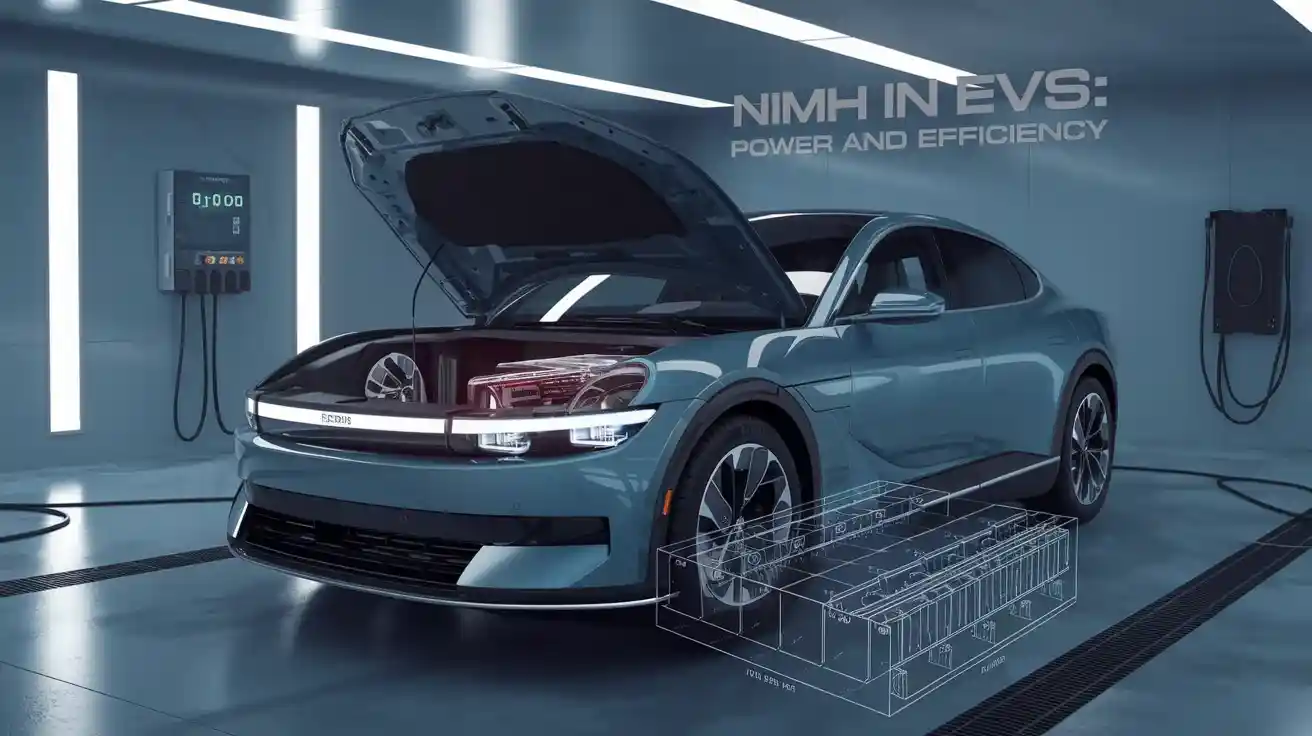
The Future of Electric Vehicles: Nickel-Metal Hydride Batteries at the Heart
As the automotive industry races towards a greener future, electric vehicles (EVs) are taking center stage. But what powers these eco-friendly marvels? Enter the unsung hero: Nickel-Metal Hydride (NiMH) batteries 🔋. These powerhouses have been quietly revolutionizing the EV landscape, offering a compelling blend of performance, safety, and environmental friendliness.
From the GM01 battery powering the iconic EV1 to Toyota’s groundbreaking Prius, NiMH technology has been at the forefront of the electric vehicle revolution. But what makes these batteries so special? And how do they stack up against their lithium-ion counterparts? Join us as we dive deep into the world of NiMH batteries in EVs, exploring their technical specifications, advantages, challenges, and the exciting developments shaping their future in the automotive industry.
Overview of NiMH Batteries in Electric Vehicles
Composition and basic characteristics
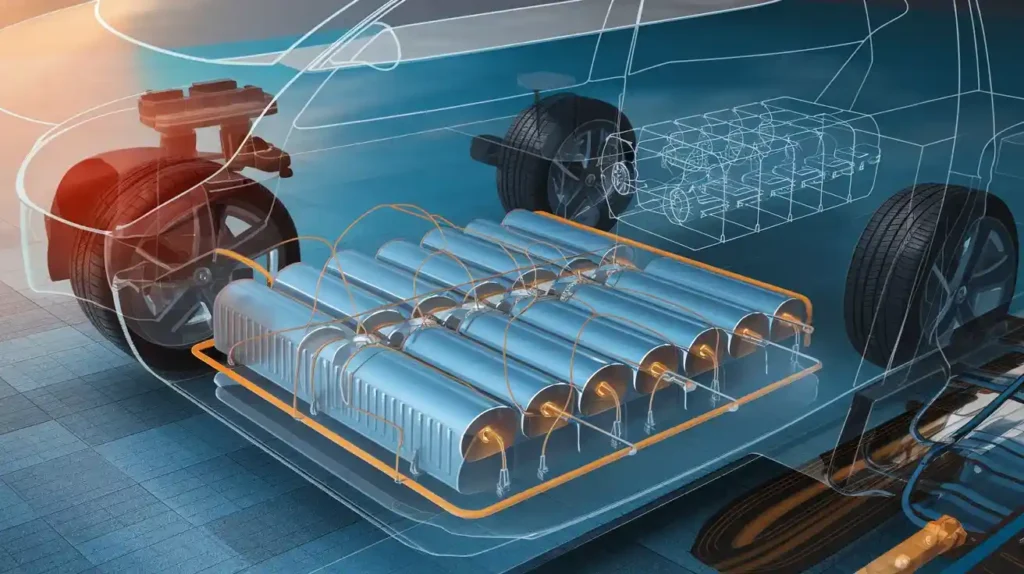
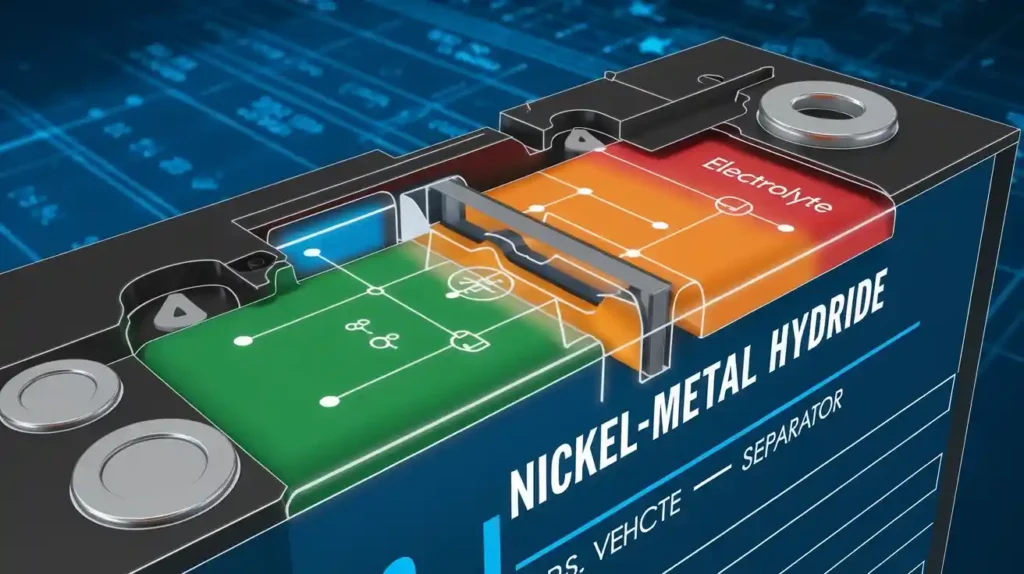
Nickel-Metal Hydride (NiMH) batteries are rechargeable power sources that have played a significant role in electric and hybrid vehicle development. These batteries consist of two key components:
- 🔸 Positive electrode: Nickel oxide hydroxide
- 🔸 Negative electrode: Hydrogen-absorbing alloy
NiMH batteries operate at a nominal voltage of 1.2V per cell, which is lower than some other battery types. However, they offer several advantages:
- 🔸 Higher capacity: NiMH batteries provide two to three times the capacity of nickel-cadmium (NiCd) batteries of similar size.
- 🔸 Improved energy density: While not as high as lithium-ion batteries, NiMH cells have a specific energy range of 0.22-0.43 MJ/kg.
- 🔸 Environmental friendliness: Made from non-toxic materials, NiMH batteries are recyclable and pose fewer environmental concerns.
The charge/discharge efficiency of NiMH batteries ranges from 66% to 92%, depending on various factors. Their cycle durability can vary significantly, from 180 to 2000 cycles, making them suitable for long-term use in electric vehicles.
Comparison with other battery types
To better understand the position of NiMH batteries in the electric vehicle market, let’s compare them with their main competitor, lithium-ion batteries:
| Characteristic | NiMH | Lithium-ion |
|---|---|---|
| Energy density | Lower | Higher |
| Nominal voltage | 1.2V | ~3.7V |
| Self-discharge rate | Higher | Lower |
| Raw material availability | More abundant | Limited (Li, Co) |
| Environmental impact | Lower | Higher (mining concerns) |
| Cycle life | High | Variable |
| Temperature sensitivity | More sensitive | Less sensitive |
| Cost | Generally lower | Generally higher |
While lithium-ion batteries have become the primary choice for many electric vehicles due to their higher energy density, NiMH batteries continue to find applications, particularly in hybrid vehicles where high power output for quick acceleration is crucial.
Historical development and adoption in EVs
The development of NiMH battery technology can be traced back to 1967, with significant advancements occurring over the following decades:
- 🔸 1967: Initial research begins
- 🔸 1989: Release of consumer-grade NiMH cells
- 🔸 1990s: Major automotive companies support NiMH technology development
- 🔸 Early 2000s: Widespread adoption in hybrid vehicles
NiMH batteries gained popularity in electric and hybrid vehicles due to their robustness, durability, and extended cycle life. The Toyota Prius, a pioneering hybrid vehicle, prominently featured NiMH batteries in its early models.
However, the adoption of NiMH technology in electric vehicles faced challenges:
- 🔸 Patent encumbrance: Allegations of corporate manipulation of the patent system to inhibit NiMH commercialization
- 🔸 Shift towards lithium-ion: Industry focus moved to lithium-ion technology, perceived as more promising for long-range EVs
- 🔸 Corporate acquisitions: General Motors’ acquisition of Ovonics and subsequent actions allegedly restricted NiMH battery market growth
Despite these obstacles, NiMH batteries continued to serve in hybrid vehicles where their high power output and reliability were valued. The expiration of key patents from 2010 onwards has opened new possibilities for NiMH technology development in the EV sector.
Now that we have covered the overview of NiMH batteries in electric vehicles, including their composition, comparisons with other battery types, and historical development, we’ll next explore the Technical Specifications of NiMH Batteries in more detail. This will provide a deeper understanding of the capabilities and limitations of this technology in electric vehicle applications.
Technical Specifications of NiMH Batteries
Now that we have covered the overview of NiMH batteries in electric vehicles, let’s delve into their technical specifications, which are crucial for understanding their performance in EVs.
A. Nominal voltage and energy density
NiMH batteries used in electric vehicles have distinct characteristics that set them apart from other battery types:
- 🔸 Nominal voltage: 1.2 V per cell
- 🔸 Energy density: 0.22-0.43 MJ/kg (specific energy range)
This energy density is notably higher than that of nickel-cadmium (NiCd) batteries, offering two to three times the capacity for a comparable size. However, it’s important to note that while NiMH batteries outperform NiCd, they still have a lower energy density compared to lithium-ion batteries.
B. Charge/discharge efficiency and cycle durability
The efficiency and durability of NiMH batteries are critical factors for their application in electric vehicles:
- 🔸 Charge/discharge efficiency: 66% to 92%
- 🔸 Cycle durability: 180 to 2000 cycles
This wide range in cycle durability highlights the variability in NiMH battery performance, which can be influenced by factors such as manufacturing quality and usage patterns. The charge and discharge efficiency is particularly important for EVs, as it directly impacts the vehicle’s range and energy consumption.
| Characteristic | Range |
|---|---|
| Charge/discharge efficiency | 66% – 92% |
| Cycle durability | 180 – 2000 cycles |
C. Self-discharge rates and temperature sensitivity
NiMH batteries have some unique characteristics when it comes to self-discharge and temperature sensitivity:
- 1. Self-discharge rates:
- 🔸 Can vary considerably based on temperature
- 🔸 Higher than some other battery technologies
- 🔸 Improved in low self-discharge (LSD) NiMH variants
- 2. Temperature sensitivity:
- 🔸 Performance can be affected by extreme temperatures
- 🔸 Charging methods must be carefully managed to prevent overcharging
- 🔸 Overcharging can lead to cell damage through hydrogen gas generation
It’s worth noting that the advent of low self-discharge NiMH batteries has significantly improved their appeal, allowing them to retain a substantial portion of their charge even after prolonged storage. This characteristic is particularly beneficial for electric vehicles that may not be used regularly.
Safety considerations are also paramount in NiMH battery design for EVs. Manufacturers have implemented features such as:
- 🔸 Resettable fuses
- 🔸 Gas venting mechanisms
These safety measures are crucial to prevent potential hazards associated with overcharging or extreme temperature conditions.
While NiMH batteries have seen a decline in market share due to the rise of lithium-ion batteries, they remain an environmentally friendly option. Made from non-toxic materials and recyclable components, NiMH batteries continue to be a viable choice for certain electric and hybrid vehicle applications.
With these technical specifications in mind, next, we’ll explore the specific applications of NiMH batteries in electric and hybrid vehicles, where their unique characteristics have found practical use in the automotive industry.
Applications in Electric and Hybrid Vehicles
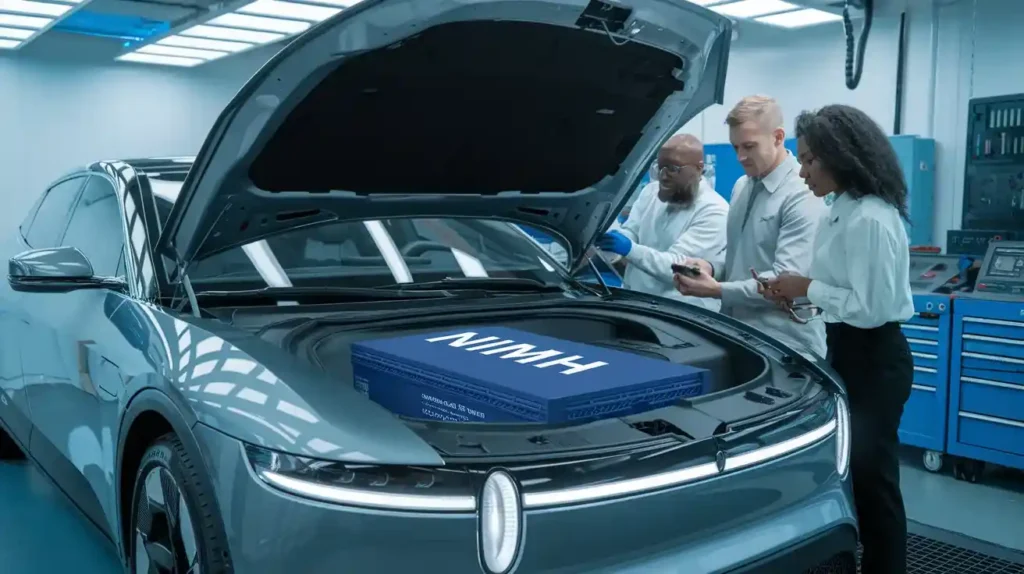
Now that we’ve covered the technical specifications of NiMH batteries, let’s explore their applications in electric and hybrid vehicles. NiMH technology has played a significant role in the evolution of eco-friendly transportation, finding its place in various vehicle types.
A. Use in Battery Electric Vehicles (BEVs)
While lithium-ion batteries dominate the BEV market due to their high energy density and power-to-weight ratio, NiMH batteries have found their niche in certain electric vehicle applications. The EV-95 model, designed specifically for EVs, showcases the potential of NiMH technology:
- 🔸 Driving range: Approximately 200 km per charge
- 🔸 Specific power: Over 200 W/kg at 80% depth of discharge (DOD)
- 🔸 Acceleration: Comparable to traditional gasoline vehicles
- 🔸 Lifespan: Exceeds 1000 cycles in testing and around four years of on-board use
For compact EVs, the EV-28 model leverages new internal cell connection technology:
- 🔸 Specific power: 300 W/kg at 80% DOD
- 🔸 Design: Lightweight and compact
These advancements demonstrate that NiMH batteries can offer practical solutions for EVs, especially in scenarios where their unique advantages outweigh the benefits of lithium-ion batteries.
B. Implementation in Hybrid Electric Vehicles (HEVs)
NiMH batteries have found widespread adoption in hybrid electric vehicles, particularly in traditional hybrids. Their advantages in this application include:
- 🔸 Wider operating temperature range
- 🔸 Lower fire risk
- 🔸 Cost-effectiveness
The implementation of NiMH batteries in HEVs has evolved over time:
| Generation | Vehicle Example | Battery Characteristics |
|---|---|---|
| First | 1997 Toyota Prius | – Cylindrical NiMH battery<br>- Specific power: 600 W/kg<br>- Life characteristic: Equivalent to over 100,000 km of driving |
| Second | 2000 Toyota Prius | – Prismatic module design<br>- Six cells connected internally<br>- Specific power: 1000 W/kg<br>- Compact pack design |
The prismatic design in the second generation reduced the number of necessary components, enhancing safety and efficiency by eliminating external connecting parts found in traditional cylindrical modules.
C. Examples of commercial vehicles using NiMH technology
- 1. Toyota Prius (2001 onwards):
- 🔸 Pioneered the use of NiMH batteries in mass-produced hybrids
- 🔸 Utilizes Toyota Hybrid Synergy Drive technology
- 2. 2023 Toyota Sienna:
- 🔸 Battery specifications: 288 V, 1.9 kWh NiMH battery
- 🔸 Automatic charging during operation
- 🔸 No plug-in capabilities required
- 3. Other Toyota hybrid models:
- 🔸 Various Toyota hybrid vehicles continue to use NiMH batteries due to their proven reliability and cost-effectiveness
While plug-in hybrids and some newer hybrid models have transitioned to lithium-ion batteries, NiMH technology remains relevant in the hybrid vehicle market, particularly in traditional hybrids.
The implementation of NiMH batteries in both BEVs and HEVs has contributed significantly to the advancement of eco-friendly transportation. These batteries have demonstrated their ability to provide sufficient power, range, and longevity for various vehicle applications. As we move forward, we’ll explore the specific advantages that NiMH batteries offer in electric vehicles, shedding light on why they continue to be a viable option in certain EV and HEV designs.
Advantages of NiMH Batteries in EVs
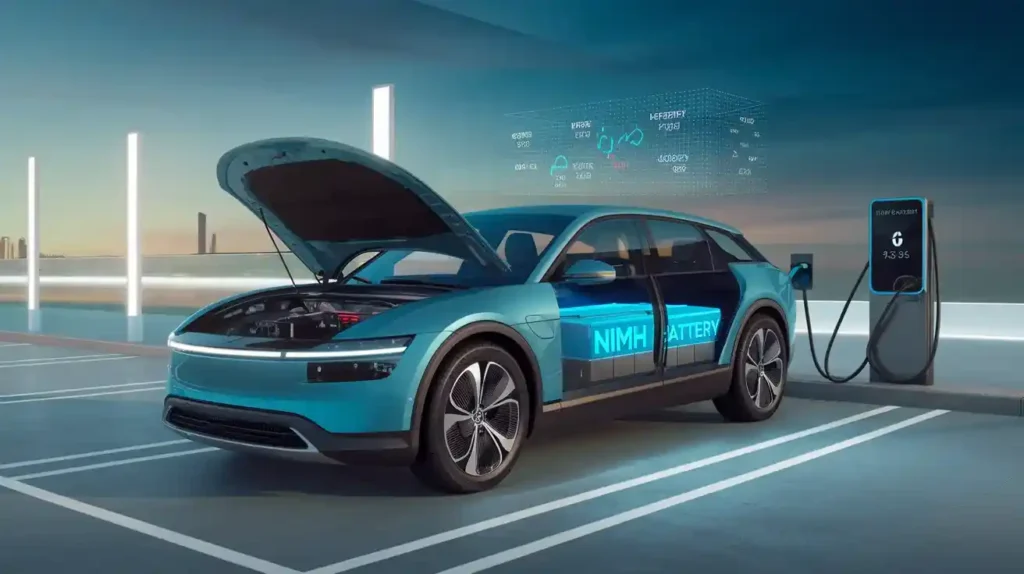
Now that we’ve explored the applications of NiMH batteries in electric and hybrid vehicles, let’s delve into the advantages that make them a compelling choice for EV manufacturers.
A. Higher energy density compared to NiCd batteries
NiMH batteries have gained significant traction in the EV industry due to their superior energy density when compared to their predecessor, nickel-cadmium (NiCd) batteries. This advantage translates to:
- 🔸 Increased storage capacity: NiMH batteries can hold up to three times more energy than NiCd batteries of comparable size.
- 🔸 Improved range: EVs equipped with NiMH batteries can travel longer distances on a single charge.
- 🔸 Enhanced performance: The higher energy density allows for better power delivery in high-drain applications.
| Battery Type | Energy Density | Relative Capacity |
|---|---|---|
| NiMH | 0.22-0.43 MJ/kg | Up to 3x NiCd |
| NiCd | Lower | Base comparison |
This increased energy density makes NiMH batteries particularly suitable for hybrid vehicles like the Toyota Prius, which has been using this technology since its 2001 launch.
B. Environmental friendliness and recyclability
One of the most significant advantages of NiMH batteries in EVs is their eco-friendly nature:
- 🔸 Non-toxic materials: NiMH batteries are made from materials that are less harmful to the environment compared to some other battery types.
- 🔸 Recyclability: The components of NiMH batteries can be recycled, reducing waste and environmental impact.
- 🔸 Reduced carbon footprint: When compared to disposable alkaline batteries, NiMH batteries help lower overall carbon emissions.
These environmental benefits align well with the green objectives of electric vehicle production and usage, making NiMH batteries an attractive option for environmentally conscious consumers and manufacturers alike.
C. Low self-discharge variants for improved storage
While traditional NiMH batteries were known for their high self-discharge rates, advancements in technology have led to the development of low self-discharge (LSD) NiMH batteries. These improved variants offer several benefits:
- 🔸 Extended shelf life: LSD NiMH batteries retain a significant portion of their charge even after prolonged storage.
- 🔸 Improved reliability: EVs using these batteries can maintain their charge more effectively when not in use.
- 🔸 Reduced maintenance: Owners of EVs with LSD NiMH batteries may need to charge their vehicles less frequently during periods of inactivity.
This development has addressed one of the primary concerns associated with NiMH technology, making it more competitive with other battery types in the EV market.
Additional advantages of NiMH batteries in EVs include:
- 🔸 Wider operating temperature range: NiMH batteries perform well in various climatic conditions, enhancing their versatility.
- 🔸 Lower fire risk: Compared to some lithium-ion batteries, NiMH batteries have a reduced risk of thermal runaway.
- 🔸 Cost-effectiveness: NiMH batteries often provide a more affordable option for EV manufacturers and consumers.
These advantages have contributed to the continued use of NiMH batteries in hybrid vehicles, particularly in models like the 2023 Toyota Sienna, which utilizes a 288 V, 1.9 kWh NiMH battery that charges automatically during operation.
With these benefits in mind, next, we’ll explore the challenges and limitations of NiMH batteries in EVs, as it’s essential to understand both the strengths and weaknesses of this technology in the context of electric vehicle applications.
Challenges and Limitations
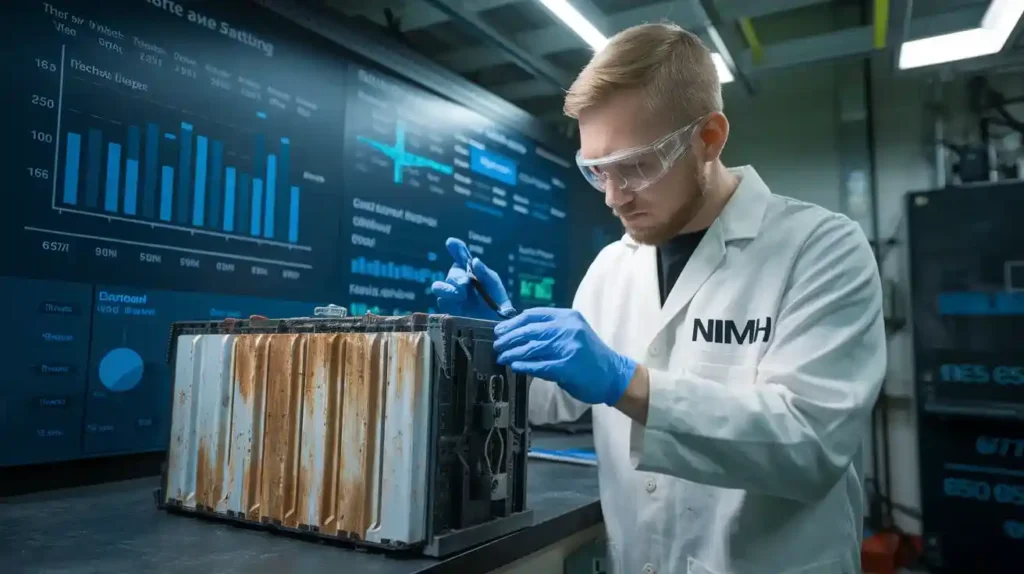
Now that we have covered the advantages of NiMH batteries in electric vehicles, it’s important to address the challenges and limitations associated with this technology. While NiMH batteries offer several benefits, they also face some significant hurdles in the EV industry.
Lower energy density compared to Lithium-ion batteries
One of the primary challenges of NiMH batteries is their lower energy density when compared to lithium-ion batteries. This difference has several implications for electric vehicles:
- 🔸 Bulkier battery packs: NiMH batteries require more space to store the same amount of energy as lithium-ion batteries.
- 🔸 Reduced range: Due to the lower energy density, EVs using NiMH batteries may have a shorter driving range on a single charge.
- 🔸 Weight considerations: The increased size of NiMH battery packs can add extra weight to the vehicle, potentially affecting performance and efficiency.
| Battery Type | Energy Density | Impact on EVs |
|---|---|---|
| NiMH | Lower | Bulkier, shorter range |
| Lithium-ion | Higher | Compact, longer range |
This limitation makes NiMH batteries less suitable for compact electric vehicles where space is at a premium. However, they remain a viable option for hybrid vehicles, where the battery size requirements are less stringent.
Overcharging risks and safety measures
While NiMH batteries are generally considered safer than some other battery types, they are not without risks:
- 🔸 Overcharging sensitivity: NiMH batteries can be prone to overcharging, which can lead to decreased performance and potential safety hazards.
- 🔸 Heat generation: During charging and discharging, NiMH batteries can generate significant heat, requiring robust thermal management systems.
- 🔸 Safety measures: To mitigate these risks, EV manufacturers must implement sophisticated battery management systems, which can add complexity and cost to the vehicle design.
To address these challenges, EV designers must incorporate:
- 🔸 Advanced charging control mechanisms
- 🔸 Efficient cooling systems
- 🔸 Protective circuitry to prevent overcharging
These additional safety measures can increase the overall cost of NiMH-powered electric vehicles, potentially making them less competitive in the market.
Voltage depression and multi-cell configuration issues
NiMH batteries face unique challenges related to voltage characteristics and cell configuration:
- 🔸 Voltage depression: Also known as the “memory effect,” this phenomenon can occur when NiMH batteries are repeatedly charged without being fully discharged, leading to a temporary loss of capacity.
- 🔸 Multicell configurations: Electric vehicles require multiple battery cells connected in series and parallel. In NiMH batteries, this can lead to:
- ➡️ Imbalanced cell performance
- ➡️ Reduced overall battery efficiency
- ➡️ Increased complexity in battery management systems
To combat these issues, EV manufacturers must implement:
- 🔸 Sophisticated cell balancing techniques
- 🔸 Regular maintenance routines to prevent voltage depression
- 🔸 Advanced battery management systems to monitor and optimize cell performance
These requirements can add to the complexity and cost of NiMH-powered electric vehicles, potentially making them less attractive compared to other battery technologies.
With these challenges and limitations in mind, next, we’ll explore the future developments and market trends in NiMH battery technology for electric vehicles. While NiMH batteries face significant hurdles, ongoing research and innovation may address some of these issues, potentially expanding their role in the EV market.
Future Developments and Market Trends

Now that we have explored the challenges and limitations of NiMH batteries in electric vehicles, let’s delve into the future developments and market trends shaping this technology.
Ongoing research for performance enhancement
Research and development efforts are continuously pushing the boundaries of NiMH battery technology. Manufacturers are focusing on enhancing the performance of these batteries to remain competitive in the evolving electric vehicle market. Key areas of improvement include:
- 🔸 Increasing energy density
- 🔸 Enhancing cycle life
- 🔸 Improving charge and discharge rates
Recent developments showcase the industry’s commitment to innovation:
- 🔸 Panasonic’s launch of high-capacity NiMH batteries for hybrid vehicles
- 🔸 FDK’s introduction of a durable AA-size NiMH battery
These advancements aim to address some of the limitations of NiMH technology, making it more viable for future EV applications.
Shift towards Lithium-ion technology
While NiMH batteries continue to play a significant role in the electric vehicle market, there is an undeniable shift towards Lithium-ion (Li-ion) technology. This transition is driven by several factors:
| Feature | NiMH | Lithium-ion |
|---|---|---|
| Energy density | 60-120 Wh/kg | 150-250 Wh/kg |
| Lifespan | Shorter | Longer |
| Charging speed | Slower | Faster |
Despite this shift, NiMH batteries are expected to maintain their relevance in specific applications:
- 🔸 Hybrid electric vehicles (HEVs)
- 🔸 Lower-range electric vehicles
- 🔸 Budget-conscious consumer markets
The NiMH battery market is projected to grow from USD 2,940 million in 2024 to USD 4,117.39 million by 2032, with a CAGR of 4.3%. This growth indicates that NiMH technology will continue to coexist with Li-ion batteries in the foreseeable future.
Importance of recycling and responsible disposal
As the electric vehicle market expands, the importance of recycling and responsible disposal of batteries becomes increasingly critical. NiMH batteries offer several advantages in this regard:
- 🔸 Lower toxicity compared to some alternatives
- 🔸 High recyclability
- 🔸 Reduced environmental footprint
The growing emphasis on sustainability and environmental consciousness is likely to benefit the NiMH battery market. Key points to consider:
- 🔸 Consumers are increasingly prioritizing eco-friendly products
- 🔸 NiMH batteries align well with this trend due to their recyclability
- 🔸 Effective recycling processes are crucial for managing end-of-life batteries
Manufacturers and researchers are exploring innovative recycling technologies to:
- 🔸 Maximize material recovery efficiency
- 🔸 Ensure safe handling and transport of used batteries
- 🔸 Contribute to a circular economy by recovering valuable metals
As awareness of environmental impacts grows, the easier recyclability of NiMH batteries may lead to increased demand in certain sectors.
In conclusion, while the future of NiMH batteries in electric vehicles faces challenges from advancing Li-ion technology, ongoing research and development, coupled with their environmental benefits, ensure their continued relevance in specific applications. The market is likely to evolve with a focus on sustainability and technological innovations, maintaining NiMH batteries as a viable option in the diverse landscape of electric vehicle power sources.
Conclusion
Nickel-Metal Hydride (NiMH) batteries have played a significant role in the evolution of electric vehicles, offering a balance of performance, safety, and environmental friendliness. With their higher energy density compared to nickel-cadmium batteries and their use of non-toxic materials, NiMH technology has been a stepping stone in the development of more efficient and sustainable electric transportation. While lithium-ion batteries have gained prominence in recent years, NiMH batteries continue to find applications in hybrid electric vehicles, showcasing their ongoing relevance in the automotive industry.
As the electric vehicle market continues to grow, driven by environmental concerns and technological advancements, the future of battery technology remains dynamic. Ongoing research and development efforts aim to enhance battery efficiency, reduce costs, and optimize energy storage systems. While NiMH batteries may see a decline in market share, their contribution to the progress of electric vehicles is undeniable, paving the way for more advanced and sustainable energy storage solutions in the automotive sector.